Role: Product designer via Underbelly agency
Contributions: Product strategy, User experience, Prototyping, Visual design, Service design
The support queue was the symptom. The diagnosis was the product's broken relationship with its vulnerable users.
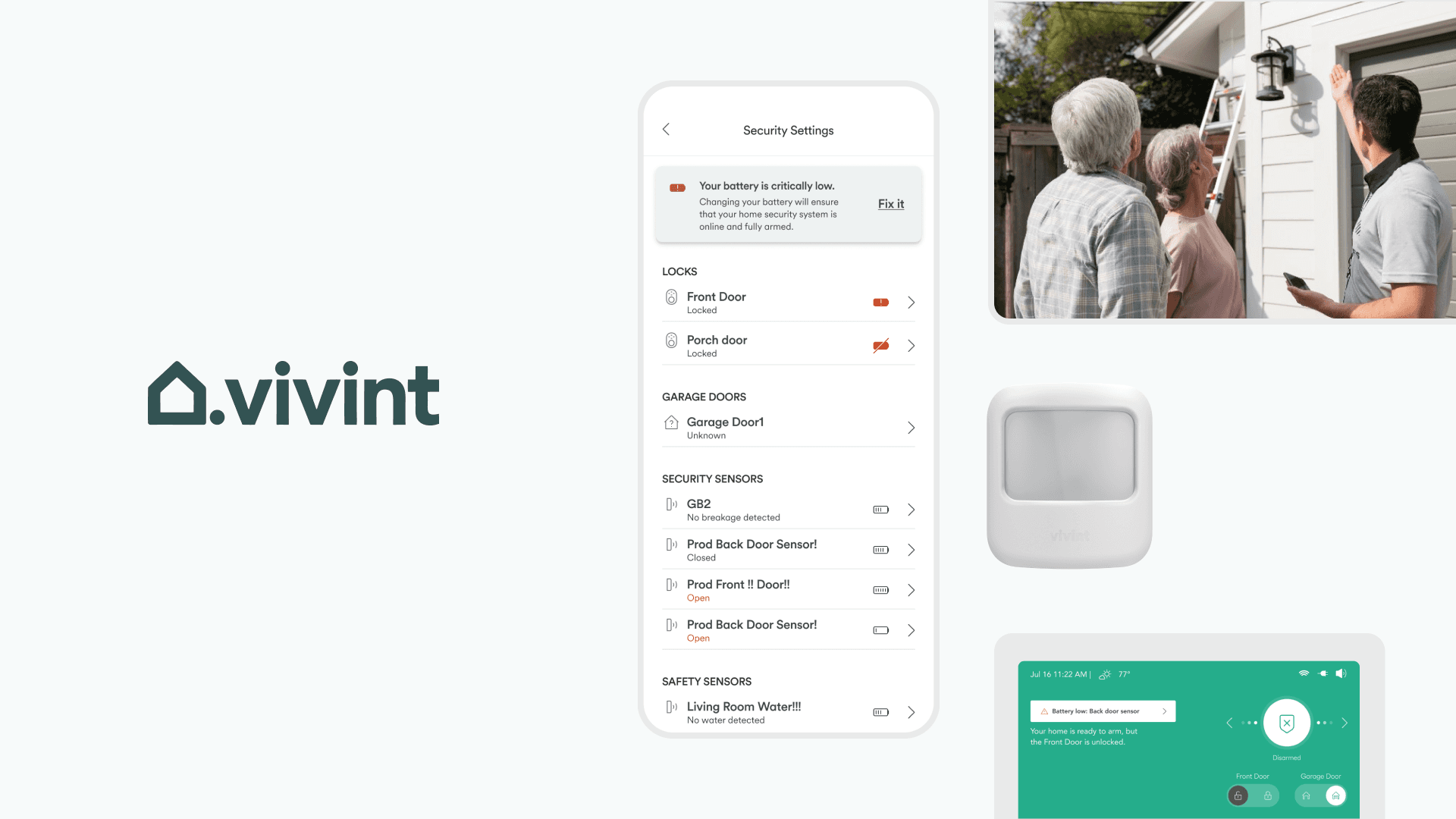
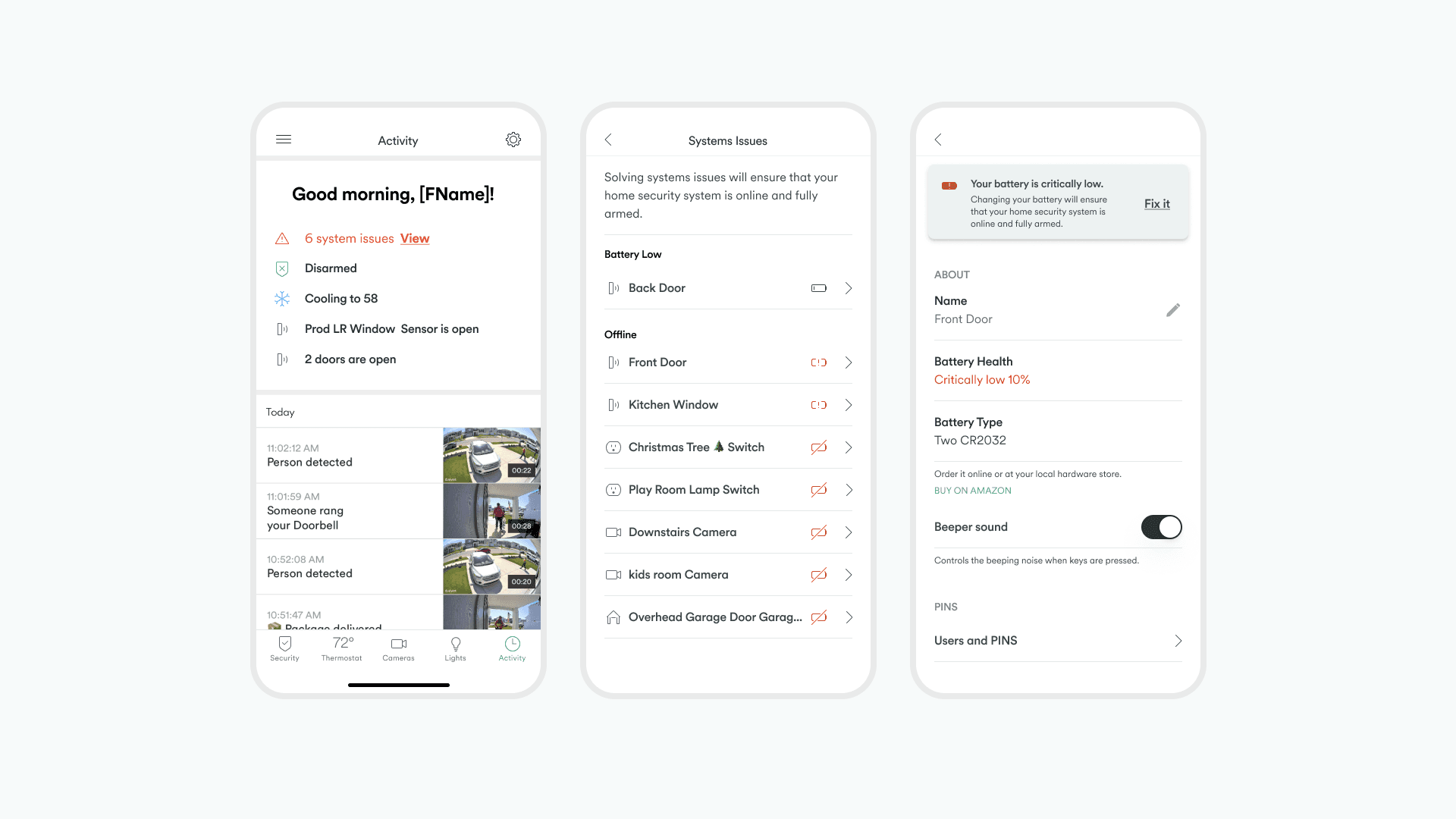
As a designer on consumer apps, I led experimental designs to enable elderly users to change their sensor batteries and address $2.5M in support costs. I proposed 3 testable flows for bringing ease and control to users by conveniently connecting them to tools, data, and education.
Challenge: Hardware-software integration, edge cases in user environment (ex. multiple devices, versioning, and locations of usage), and limited app surface area to influence.
Key decisions: I emphasized trust, transparency, and a service-based approach to weave physical and digital experience and empower ownership. I also worked closely with our lead user researcher to strengthen decisions.
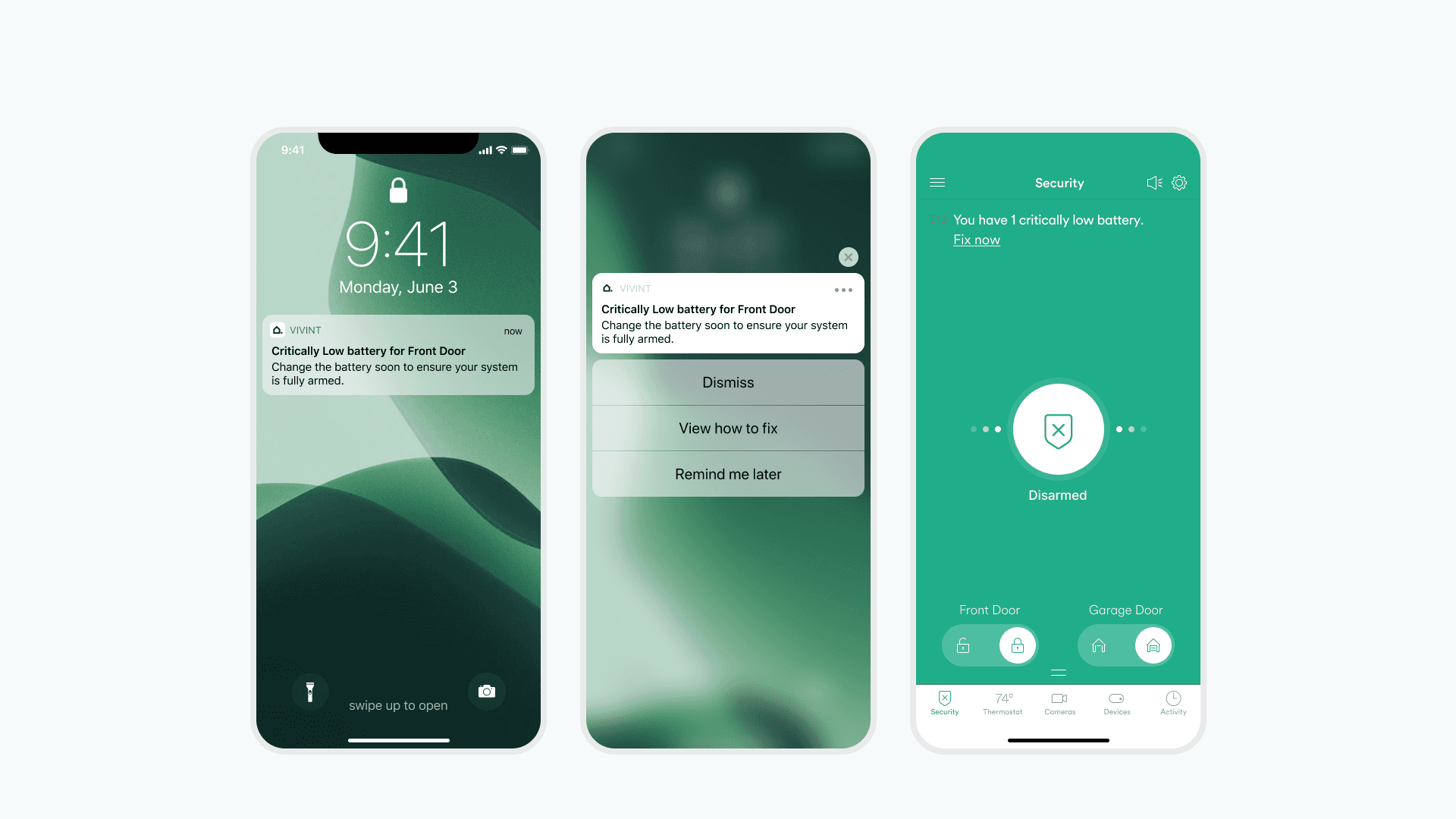
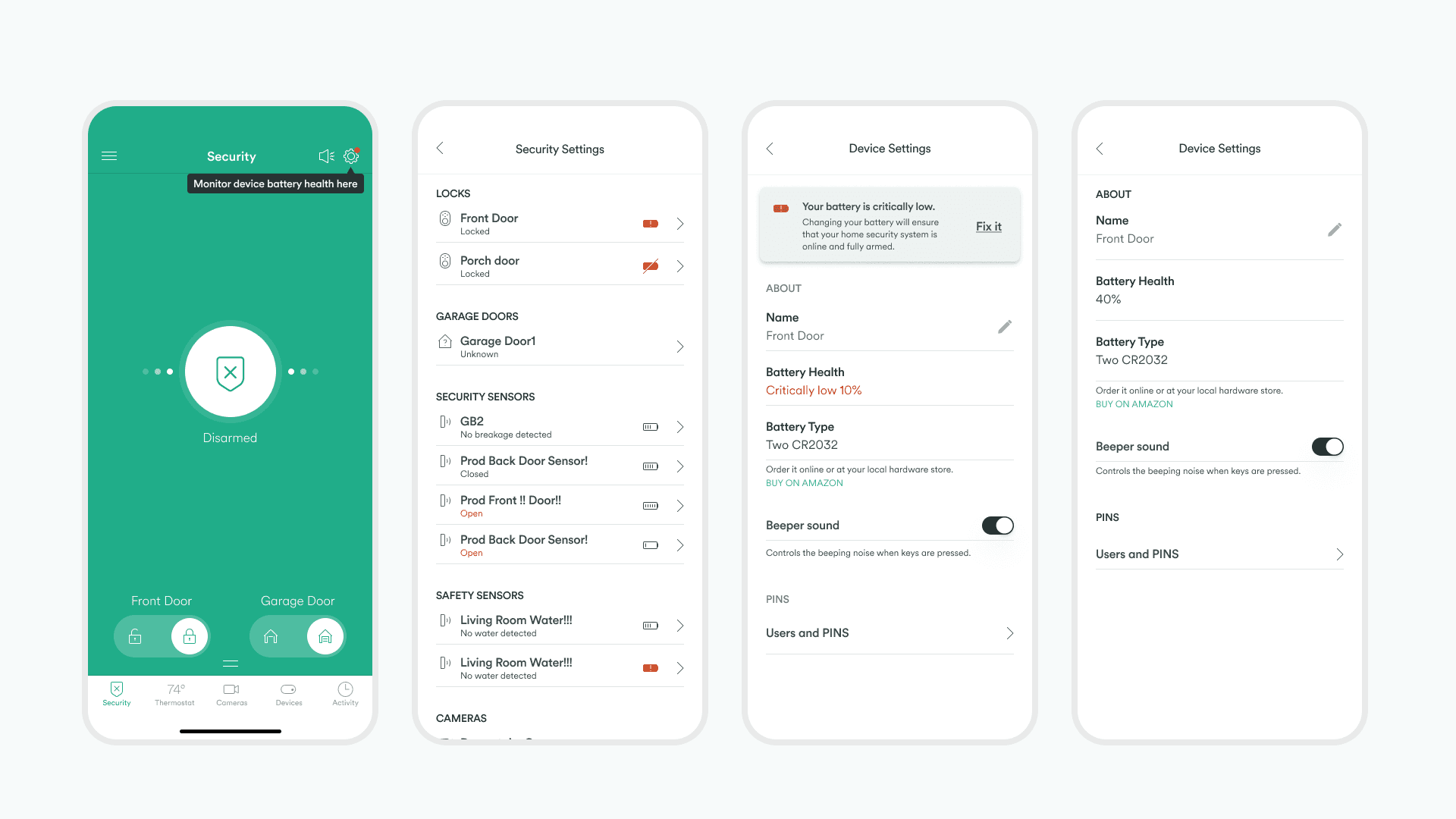
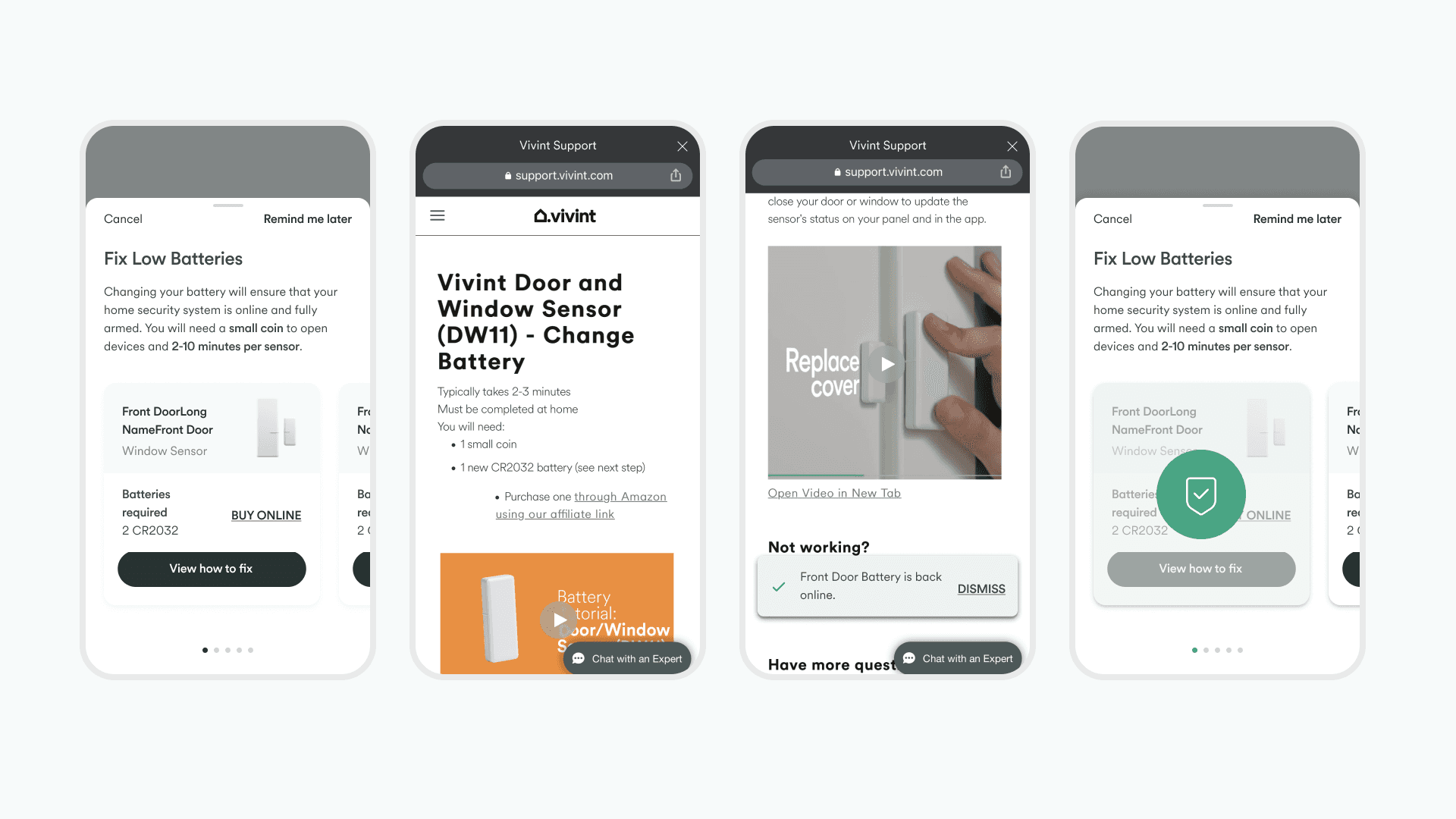
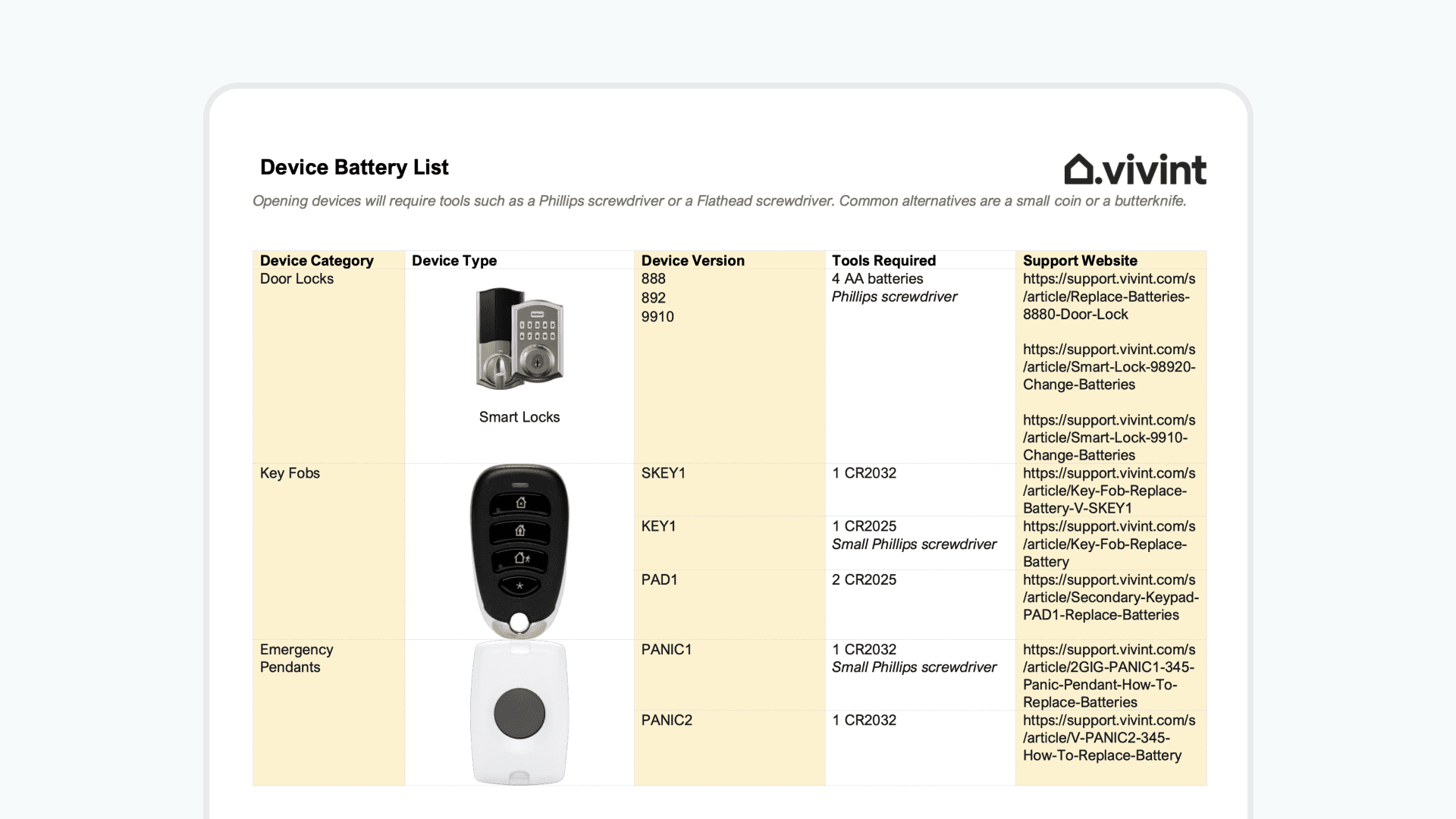
I created 3 holistic solutions to teach users to take ownership and manage their security systems. My solutions offered (1) control panel status view of their system, (2) wiki links immediately in-app, (3) convenient purchase links for supplies, and (4) offline options, referencing all the devices and corresponding batteries that service teams could physically hand out on the job.
Reflection: To achieve hardware-software integration, builders need to be aligned on versioning, sharing surfaces, and communicating updates across the ecosystem. If not, then fragmentation, thereby, poor user experience, is inevitable and incurable.